

Bone Cells Use Vitamin K Signals to Regulate Osteoclast Fusion
Genetic inactivation of γ-carboxylation in osteoblasts increased trabecular bone mass and reduced osteoclast activity in male mice, revealing a vitamin K-dependent GAS6 signaling pathway that regulates bone resorption.
Researchers identify a vitamin K-dependent GAS6 pathway that controls osteoclast maturation and bone resorption in mice
CHINA, May 21, 2026 /EINPresswire.com/ -- Vitamin K has long been linked to bone health, but its precise role remained unclear. A new study shows that vitamin K-dependent γ-carboxylation in osteoblasts regulates bone breakdown through the signaling protein, GAS6. In male mice, blocking this pathway increased bone mass by reducing osteoclast formation, while elevated GAS6 enhanced bone resorption. The findings uncover a previously unknown communication pathway between osteoblasts and osteoclasts, offering insights into osteoporosis and future skeletal therapies.Bone is continuously renewed through a process known as bone remodeling, in which osteoblasts (bone-forming cells) build new bone, while osteoclasts (bone-resorbing cells) remove older mineralized tissue. Maintaining the balance between these two cell types is essential for skeletal strength and fracture prevention. Disruption of this balance can lead to osteoporosis and other metabolic bone diseases. Although vitamin K has long been associated with bone health, its precise biological role has remained unexplored. Scientists have therefore sought to understand the molecular pathways through which vitamin K regulates skeletal homeostasis.
Addressing this challenge, a research team led by Dr. Mathieu Ferron, Director of the Molecular Physiology Research Unit at the Montreal Clinical Research Institute (IRCM), Canada, investigated how vitamin K-dependent γ-carboxylation regulates communication between osteoblasts and osteoclasts. Using genetically engineered mouse models, osteoblast–osteoclast co-culture systems, molecular signaling analyses, histology, and microcomputed tomography imaging, the researchers explored how vitamin K-dependent proteins influence bone remodeling. Their findings were published on April 28, 2026, in Volume 14 of the journal Bone Research.
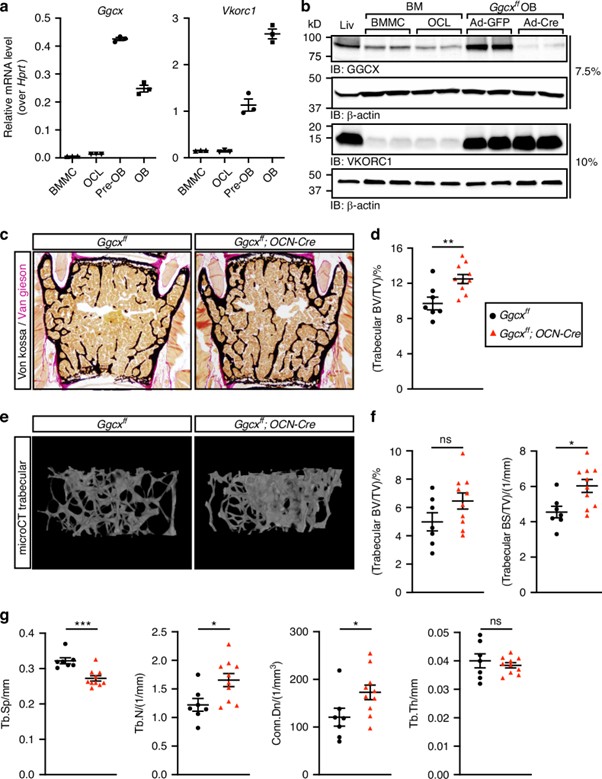
The team first examined the enzymes responsible for vitamin K-dependent γ-carboxylation. They found that the enzymes, γ-glutamyl carboxylase and vitamin K oxidoreductase were expressed predominantly in osteoblasts rather than osteoclasts, suggesting that vitamin K signaling acts mainly through bone-forming cells. To investigate this pathway, the researchers selectively deleted γ-glutamyl carboxylase in the osteoblasts of male mice. By 6 months of age, these mice developed significantly higher bone mass, with denser and more interconnected bone structures.
Further analyses revealed that the increased bone mass was driven primarily by reduced bone resorption rather than enhanced bone formation. Osteoblast-specific loss of γ-glutamyl carboxylase significantly lowered osteoclast number and surface area, while circulating markers of bone resorption were also reduced. In co-culture experiments, osteoblasts lacking the γ-glutamyl carboxylase were substantially less effective at supporting osteoclast formation.
The researchers next searched for a γ-carboxylated protein capable of linking osteoblasts to osteoclasts. Their analyses identified growth arrest-specific 6 (GAS6), a signaling molecule secreted by osteoblasts that activates the TAM family receptors, AXL and MerTK on pre-osteoclasts. Recombinant γ-carboxylated GAS6 strongly promoted osteoclast formation and increased the number of nuclei per osteoclast, producing larger multinucleated cells capable of enhanced bone resorption. Pharmacological inhibition of AXL and MerTK receptors markedly suppressed osteoclast generation, confirming the importance of the GAS6–TAM signaling pathway.
“Our findings reveal an unexpected mechanism through which osteoblasts actively regulate osteoclast maturation,” says Dr. Ferron. “Vitamin K-dependent γ-carboxylation not only affects bone mineralization. It also controls how osteoblasts communicate with osteoclast precursors through GAS6 signaling.”
To determine whether elevated GAS6 could directly alter skeletal remodeling in vivo, the researchers studied transgenic mice with increased circulating GAS6 levels. These animals displayed the opposite phenotype, including lower bone density, increased osteoclast number, and enhanced bone resorption. Additional experiments showed that GAS6 mainly promoted the fusion of pre-osteoclasts into mature multinucleated osteoclasts rather than altering osteoclast differentiation itself.
“The study provides a new framework for understanding how vitamin K influences skeletal biology,” Dr. Ferron explains. “Targeting GAS6 or TAM receptor signaling could eventually help modulate excessive bone resorption while preserving normal bone remodeling.”
The findings may have important clinical implications. Over the longer term, identification of the GAS6–TAM signaling axis may support development of therapies for osteoporosis and other disorders characterized by excessive osteoclast activity.
Overall, the study identifies a previously unknown vitamin K-dependent pathway through which osteoblasts regulate osteoclast maturation and bone resorption. By uncovering GAS6 as a mediator linking osteoblasts and osteoclasts cells, the research advances understanding of skeletal homeostasis and opens new possibilities for therapies targeting bone fragility and metabolic bone disease.
***
Reference
Title of original paper: Vitamin K-dependent carboxylation in osteoblasts regulates bone resorption through GAS6 in male mice
Journal: Bone Research
DOI: 10.1038/s41413-026-00528-2
About Montreal Clinical Research Institute, Canada
The Montreal Clinical Research Institute (IRCM) is a leading Canadian biomedical research institute dedicated to advancing discoveries in molecular biology, metabolism, genetics, cancer, and clinical medicine. Located in Montréal, Québec, the institute integrates fundamental and translational research to better understand human diseases and improve healthcare outcomes. IRCM scientists collaborate globally across disciplines, combining innovative technologies with clinical expertise to accelerate scientific progress. The institute is recognized for its strong focus on training emerging researchers and fostering breakthroughs in precision medicine, endocrinology, and regenerative biology.
Website: https://www.ircm.qc.ca/fr/
About Dr. Mathieu Ferron
Dr. Mathieu Ferron served as the Director of the Molecular Physiology Research Unit at the Montreal Clinical Research Institute, Canada, in 2023. He is also an Full Research Professor in the Department of Medicine at the Université de Montréal and Adjunct Professor at McGill University. His research investigates vitamin K biology, endocrine functions of bone tissue, glucose metabolism, insulin signaling, and metabolic diseases. Dr. Ferron has authored more than 70 publications with over 15,000 citations. His work has significantly advanced understanding of bone–energy metabolism interactions and metabolic endocrinology worldwide.
Funding Information
This work was supported by funding from the Fonds de Recherche du Québec–Santé, Canada Research Chairs program and Canadian Institutes of Health Research grant PJT-159534. B.A.R. received a postdoctoral fellowship from the Fonds de Recherche du Québec–Santé.
Yini Bao
Bone Research Editorial Office
+862885546461 ext.
email us here
Legal Disclaimer:
EIN Presswire provides this news content "as is" without warranty of any kind. We do not accept any responsibility or liability for the accuracy, content, images, videos, licenses, completeness, legality, or reliability of the information contained in this article. If you have any complaints or copyright issues related to this article, kindly contact the author above.
